|
ALL ABOUT TERMITES...
1-877-806-PEST (7378)
Common name: eastern subterranean termite
Scientific Name: Reticulitermes Flavipes (Kollar) (Insecta:
Isoptera: Rhinotermitidae)
Most pest species of subterranean termites in North America belong to
the endemic genus Reticulitermes. Reticulitermes species are
found in every state in the continental United States except Alaska, but
are most common in the warm and humid southeastern region. The eastern
subterranean termite, R. flavipes is the most widely distributed
and is found in the entire eastern region of North America as far north as
Ontario, Canada, and south to Key Largo, Florida. This is the most common
species in Alabama.
This colony, as its name suggests, lives primarily in the ground.
Their colony is located above the water line but below the frost line, so
in North Alabama that would put them from 6 to 8 feet in the soil. There
are seven different castes or types of termites that live together in a
colony which will total approximately 1 million termites per colony.
Studies estimate there are 14 to 15 colonies of termites per acre in the
Southeastern United States.
The different castes are:
A) King and Queen
B) Primary reproductive (Nymphs)
C) Secondary Reproductive (Brachnius Nymphs)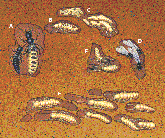
D) Swarmers (Alates)
E) Soldiers (
F) Workers (pseudergates)
The Worker termite is the only termite in the caste that can digest
wood, thus the only one which can damage your home.
The worker termite is constantly searching for a new food source.
They work 24 hours a day with no sleep and 365 days a year. A
worker termite has to be aggressive in looking for food because a mature
colony of termites can consume up to a pound of wood a week. A
Termite's diet mainly consists of organic matter. They serve a
useful purpose in the environment by decomposing dead wood.
Unfortunately, no one told the termite that we build or homes out of dead
wood, we call it lumber, they call it a meal. Termites can travel up
to 150 feet a day away from their colony in search for food.
The Worker termite is blind and must always maintain a high moisture
content. When they travel above the ground, they'll construct mud
tubes for protection and for moisture.
A visual inspection in the crawl space revealed the problem. More
frequently the termite tubes will remain hidden inside the hollow
block walls which will conceal the termites and they can remain undetected
until the termites have already done their damage and go un-noticed by the
home owner. A termite only needs 1/64 of an inch to squeeze through,
so remaining undetected is often the biggest threat of termites.
What about the Flying Termite?
The flying termite is called the swarmer, or Alate. It is the
reproductive termite that flies out, or swarms in the spring or fall of
the year. This is normally the first sign that homeowner may have
a problem. Unfortunately, if you wait until you see swarmers, then
you have waited to long. This caste of termite doesn't eat any wood,
but travels up the mud tubes made by the worker termite and waits for the
proper temperature and moisture to mate. Once the termites swarm,
they normally return to the soil within 48 hours. If you have
swarmers, then you have workers. The swarmers will go away on their
own, but the workers will remain all year long and continue to eat
the wood. If you see swarmers and your home is not currently under a
protection plan then it is suggested that you have your home
professionally inspected. Call Custom Pest Control for free
inspection.
Request Inspection
|